Showing posts with label CENZ16. Show all posts

Monday, 16 January 2017

Crowdsourced Whakatauki - An example of Collaboration


LINK HERE

Crowdsourcing - Collaboration in Action.  Thanks Anne Kenneally (@annekenn) for sharing this fantastic example of teachers collaborating. See more examples at Anne's blog Crowdsourced documents

Wednesday, 26 October 2016

Day 26 - Moving from vision to action

This post explores the idea of bringing your vision to life through practical strategies and empowering others. It is written by Rob Clarke and originally appears on learningarchitects.com

Effective school leaders instinctively grasp the vital importance of a shared, coherent, and inspiring vision for their school. They also grasp, and are able to put into action, the various elements that enable that vision to translate into practice. 


When it is fully manifested, this vision forms the very heart and identity of that community, acting as the foundation for a curriculum and a culture that is responsive and ‘flexes’ to the specific needs and aspirations of everyone involved. This is equally true of the new schools I am involved in as well as those that have existed for a while.

But very often, a school’s vision remains just that – an idea or a set of aspirations that forever remain on the horizon. A significant proportion of schools never quite manage to turn them into reality, and this is not due to any lack of commitment or genuine desire to effect change. Could this be due to a lack of tangible strategies the leadership has to draw from perhaps? Or perhaps it is the mistaken belief that the vision will somehow magically take everyone in the right direction once it has been decided upon and shared.

The successful implementation of a vision does not happen by accident, and the good news is that taking a few simple steps can quickly point you in the right direction and start the process towards transformation.

This transformation begins with the school’s leadership and staff clarifying its vision and the goals that support the realisation of the vision, then taking action consistent with those goals. By then designing and implementing defined, measurable strategies and actions, the school has the ability to mobilise the whole school community towards achieving its fullest potential. Indeed one of the workshops we offer ‘Developing Your School Vision’ enables leaders and their teams to identify the goals and behaviours they choose which will take them closer to this vision.

David Taylor (2014) describes some of the practical steps in effecting change management, from initiating a formal plan, discussing and revising ideas, to establishing how progress will be measured, anticipating problems and ensuring all the necessary resources and supports are in place along the way. Crucially, he also notes the critical role of communication throughout this process, which he sees as the key predictor of success in effecting change.

“As leaders, if we do not communicate clearly to inspire the correct [I prefer the words ‘consistent and/or ‘aligned’ rather than the term ‘correct’...] actions and behaviors, our visions and all related initiatives will fail.” (Taylor, 2014)
Vision and action are interdependent and intertwined throughout this process of improvement and innovation: without strategic action, the vision will never be realised, and without a coherent shared vision that your team has committed to, no one will be inspired to action. When these elements are present, there is limitless potential for positive transformation. Tony Robbins summarises this nicely with his views on the importance of execution in this short video which you can see on learningarchitects.com here...


As the driving force behind the vision, the school leadership and staff must provide the focus for the actions which build towards the vision, discussing it and supporting it from a place of enthusiastic and authentic commitment. They must manifest the new vision, demonstrating that it is tangible, right now, even if it has not yet been achieved to its fullest extent.

One very practical approach is to take the vision and treat it as a lens through which schools can evaluate various activities (for example: such as staff professional learning meetings, board meetings or new initiatives) to ascertain ‘how has this brought us closer to our vision for student learning?’ This is one of the many practical strategies that can ‘give your vision legs’.

This sort of leadership does not need to demand “buy-in”; it naturally calls forth genuine, wholehearted responses and calls to action, and consequently empowers everyone in the wider community to become a fully engaged changemaker in their own right too. It is on this firm foundation that progress can be made towards making this shared vision a reality that you can see, touch, hear and feel in your school.

It is written by Rob Clarke. Rob is the founder of learningarchitects.com


Monday, 24 October 2016

Day 24 -Why do we have to change?

This post was written by Rob Ferguson, one of the foundation teaching staff at Rolleston College/Horoeka Haemata. His blog can be found here.

I've started a new job! It's a unique opportunity. It's at a brand new school, so new in fact it's still wrapped in plastic as I type. This means we have term 4 to reflect on the past and what the future could and will look like with out the pressure of students.

At Rolleston College we are going to be doing things quite differently from the ways of the past. Dr Julia Atkin in so many of her presentations about change says you should first of all ask the question 'Why?'. In the two weeks leading up to starting my new position there were a couple of links to articles that turned up on social media that are part of the answer that question for me.

The first was written by Nigal Latta for the Star Sunday Times outlining his thoughts on the direction the New Zealand economy needs to evolve. For me his second last sentence says it all "it's that they find little niches in the world market and fill them." I'm no economic expert, but to me, it seems the best way for a small country in the South Pacific to compete on the world stage.

The second 'Nigal Latta only tells half the story on the economy' was by Geoff Simmons for the Morgan Foundation. In it he talks about how more than half of our national wealth is in housing and the affect this has on our businesses ability to step into overseas markets.

To effect change that can address the issues outlined in these two articles, we need to look to our youth. No pressure on teachers, but if we do things differently in education, then maybe in the near distant future things will start to change more in the New Zealand economy.

The interesting thing, is the inspiration and exemplars are out there. At the same time I was reading the above articles these two came out. One on Jamie Beaton and his Crimson Consulting company raising of capital in New York. Tech based companies are an obvious direction but not the only one. This article on Celia Robinson, group  co-CEO of Myfoodbag gets you thinking how big could it get?


Dan Pink in his book 'A whole new mind' talks about the world entering the 'Conceptual Age' and suggests that to survive and thrive in this age you need to ask 3 simple questions. Can a computer do what you do faster? Can someone in the world do what you do cheaper? Are you producing something in demand in the age of abundance? If you answer yes to the first 2 and no to the last, things will be tough.

I like what Dan has to say in his book and the two examples of success above answer his questions in the way they need to in the conceptual age. 

Sunday, 23 October 2016

Day23 -Subject Communities, not Silos...

During the week, two of our tasks at Rolleston College/ Horoeka Haemata involved the unpacking of two Learning Areas from the New Zealand Curriculum: one given to us (not one we strongly identified with – unfamiliar text, you might say…); and the one we most strongly identified with. For me, this meant the first task was to try and unpack Health and Physical Education and to present what I thought to others, one of whom was actually an HPE specialist! For the second task, I worked with another Science specialist to unpack this Learning Area, and present the key elements (and “non-negotiables”) to all other staff.


One of our Senior Leaders talked about how we needed to be respectful when unpacking Learning Areas that were not our own. He addressed the term “Silos” that keeps being bandied around. He explained that he preferred to think of these more as Communities. This resonated with me. These Communities are populated by people. These people have adapted to be successful in these Communities. These people know what the key elements are for being successful in their respective Community. These strengths and predispositions need to be respected when we try to communicate which elements we see as being important in our new Community of Learning…

If we think of Silos instead, it is very easy to forget the human side of the Learning Areas. I know that I immediately think of each Silo being a different part of a machine, doing its own unique and important role, that contributes to the functioning of the machine we call Student Learning. To get those Silos (machine parts) to work together successfully takes a fair bit of coordination. It often takes students a long time to see the connections between the parts. I guess this analogy works for me as well, but it lacks the human element of Communities. I like the human element.

What about those tasks?

Unfamiliar Learning Area

He oranga ngākau, he pikinga waiora.
We were given a period of time to try and break the Learning Area down into 20 (or so) words/key points. From this, we had to break it down into only five!! When discussing multi-disciplinary learning with peers in the past, the common concern has been about the potential for “dilution” of content and key skills. This thought struck me again – only five words/key points?!

Once I started, it was surprising how easily this Learning Area unpacked. A couple of different ways to arrange the Learning Area quickly evolved for me:

Four Strands/Contexts
  • Personal Health and Physical Development
  • Movement Concepts and Motor Skill
  • Relationships with Other People
  • Healthy Communities and Environments

 Four Concepts
  • Hauora
  • Attitudes and values
  • The socio-ecological perspective
  • Health promotion

Ultimately, though, I felt that everything emanated from Hauora. Therefore, I felt I had my five words, so long as I showed their interdependence with arrows:


Then came the tough part. Share this with someone from the HPE Community. When I fleshed out my simple little diagram with some thoughts about context and content, this was received much better than I thought!!

Familiar Learning Area

Mā te whakaaro nui e hanga te whare;
mā te mātauranga e whakaū
The task for this seemed much easier. It was the same task but within “my” Community – Science. I worked with another member of the same Community. This should be easy, surely! Not so. Within our Community, each member seems to put different value on different elements of the Community. That is natural.

However, what prevented this becoming a barrier was how easily these could be fleshed out. We were speaking the same language. We were able to group, classify and categorise our own ideas into bigger pictures under the “Nature of Science” umbrella. Finding five words/key concepts was, ultimately, not too tough (being familiar with TKI helped a lot with this, too!!):
  • Evidence-based
  • Knowledge is Provisional
  • Uses Models and Theories
  • Influenced by Society

We then unpacked each strand (Material World, Physical World, Living World, and Planet Earth and Beyond) into a couple of key “non-negotiable” points. These were the elements we felt were non-negotiable and may not be “diluted” by involvement in multi-disciplinary learning. Student learning must include the key elements (content and/or skills) of Science we identified. Boiled down, we did really get it down to:
  • Matter
  • Energy
  • Forces
  • MRS GREN
  • Ecosystems
  • Inheritance
  • Cycles

Throw in some critical thinking, and I think the key words and non-negotiables cover the nature of the Nature of Science. The excitement came from hearing how other Learning Areas were unpacked, and seeing how Science could complement each of those “Communities” without diluting either. 

In fact, I can imagine how each Community (Learning Area) will be enhanced, along with the overall learning of each student, by having natives from each Community involved in each multi-disciplinary module. The NZ Police may build “Safer Communities Together”, but we will build “Stronger [Learning] Communities Together”.


Matt Nicoll is one of the foundation teachers at Rolleston College/Horoeaka Haemata. His blog can be found here. 

Friday, 21 October 2016

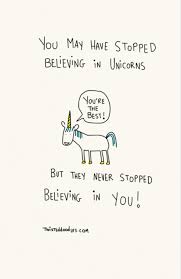
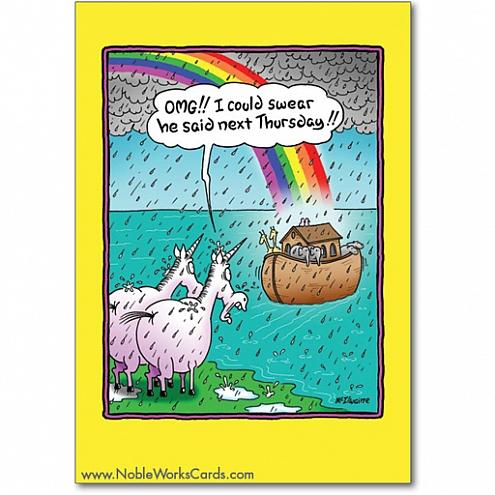
Day 21 Can There Really Be A Unicorn School?

Today's post is by Sophie Ralph, the Hauora Leader at Rolleston College/Horoeka Haemata.
images
I recently read an article in the Harvard Business review about ‘unicorn’ businesses, such as Uber, and how they have grown from simple ideas to worldwide business models which are challenging the status quo. HBR How Unicorns Grow. It made me think of kura in New Zealand and of course worldwide who are challenging the status quo and pushing for dramatic change in our education system of old.
After reading this article it made me think of how starting with a clean slate we could in-fact grow a unicorn. We would not be the first to try it and our unicorn may be different to others but with all mythical creatures we have our own interpretation. I like to think that a unicorn has a little bit of magic and all learning institutions have this but how do we use this ‘little bit of magic’ for good rather than evil. A tad dramatic possibly, however all researching on educational change is pointing in a certain direction but many are hesitant and fighting to stop ourselves from going towards the light.
What would a Unicorn School have?
Magic – This can be seen in the people within the unicorn school who feed and nurture the unicorn from a young age. People who care, people with passion, people who are invested in the values and mission of the kura. People who have a strong moral purpose for all learners, a moral purpose that to goes beyond the school gate with learning and support. I see this happening a lot already in many schools. All staff, sports coaches, cultural tutors, mentors and administrators often go above and beyond harnessing and exploring the passions  of students. Looks like we already have magic covered.
Ideal Growing/Living conditions – An environment that learners are connected to both the physical and spiritual world. An environment that is not ‘cut off’ from the resources that it needs. An environment that nurtures growth and safe exploration within the surrounds. An environment that explores connections to local and global networks, this can be achieved through online connections or face to face connections from the magical people previously mentioned. Conditions that feed the belly, soul and mind. Looks like we have ideal growing/living conditions covered.
Ability to Fly – This could be tricky but if we take the time we can often see learners challenging themselves with difficult tasks and challenges that they set themselves. I guess it depends on your definition of flying. To see a learner fly under their own steam and from their own creations, even if at times a little close to the sun. The magic and living conditions support them to fly.
With all the things mentioned above in place why are schools acting more like unicorns? We are so bogged down with meeting national standards assessment has begun to drive learning. Reporting back in a way that makes a child a level or a number is pleasing for whanau. We accept this. Hearing discussions  that “My child is above average” congratulations, above average how about inquisitive, curious, and creative. Would you like to be described as above average in your online profile, would you write this in an application letter. “I am above average and can meet deadlines”….I would rather be described as creative, curious and caring. Don’t get me wrong standards are important and a robust education system with appropriate checks and measures in place are important but lets be more like a unicorn. Whatever you want that makes you magic and able to fly.
Upon sharing this article with another teacher I was told unicorns are a lovely idea but not real….but they could be. Let’s do it, watch this space.
unicorns-missed-the-ark-495px-495px

Saturday, 8 October 2016

Day 8 - The Power of Connections

Day 8 - Day 8 - Online communities

The Power of Connections - Karyn Gray

Am sitting at the airport waiting for the first of two flights to fly home after three day in Rotorua at ULearn.
Sounded like a great idea in March when we decided as a leadership team to put in submissions to present at this years conference.  Heading off to Rotorua this week we were very aware that our staff begin next Monday and that time pressures were well and truly hitting in and I think beginning to wonder if this was a good use of our time.

I think we would all now say that it definitely was.

We've been in the fortunate and privileged position of having the last 9 months to think and read, and visit and reflect and cogitate. To form the basis of a curriculum and to think deeply about all the "That's The Way We've Always Done It," rhetoric in schools and to interrogate this and ask why a lot until we had a direction for which we would like learning to evolve at Haeata.

So I guess many of the sessions we attended were more affirming of the learning that we've been privileged to do than new stuff for us. But we would also all say that the process of considering and creating presentations about some of our work is hugely clarifying for our own beliefs and practices.

And the absolute real power in the last thee days was the opportunity to connect. To connect with people we only know or recognise form the online educational community. To connect kanohi te kanohi with old connections and create new connections. To talk and to challenge with old friends and with new connections.

Years ago I read Will Richardsons book where the subtitle is Using the Power of Connections to Transform Education.


I think that is a big part of the power of the ULearn conference. Where else do you get nigh on 2000 educators together in one space? (And with a significant more joining the back channels of live streaming and following the twitter threads.) 

For me, personally, I reconnected with educators I worked with as long ago as 20 years ago. Amazing conversations , amazing stories to share and reconnections to form.

For us as a school we've been able to share a little part of the journey of Haeata so far and our passion and excitement for what is to come. 

Transforming education, and particularly transforming schooling is happening in little pocket all over Aotearoa. The power of connections is moving us steadily towards the tipping point where the changes so deeply needed in ours choosing system will become the whole clothing rather than just the pocket. 

The power of the understanding of the need for change when 2000 educators connect at an event like ULearn is palpable. Continuing to connect with each other- post conference is how we will work together in order to push that change over the timing point.

Thanks to all those old friends and colleagues Ive reconnected with in the last three days. What an awesome opportunity to do so. 

And welcome to all this new connections to my personal and professional learning network. Long may the conversations continue.


Friday, 7 October 2016

Less than 72hours till Term4 begins!!


Day 7 #CENZ16 Starter Kete Day 7 - Facebook


Day 3 - uLearn16   DIYPD  
       Shoutout to the Twitter Tribe #notatulearn16

After a great night of a "Kiwiana themed" conference dinner, 
it was back onto the buses to go to a variety of venues around Rotorua for an 8.30 start for the final morning of workshops and ending with a keynote by Karen Spencer who congratulated over 1800 educators on spending 3 days of their holidays on their own PD , but also mentioned that there was only 72hours until Term 4!

I decided to go to the early morning CENZ Conversations which were live streamed, so educators who were not at uLearn16 could also benefit from the free PD. Viv Hall @vivhall talked about Throughput the three days a large group of educators  including @Allanahk @kerriatamatea @mrs_hyde @AKeenReader have been tweeting using the #notatulearn16 hashtag. This is a fun way to connect with others notatulearn, but also a great way for DIYPD.  There have been many free webinars throughout the year - check out enabling e-learning, but all the webinars from EEL and CENZ are available online if you missed them.

Another way to gather up the free PD resources is to search for the hashtags #notatulearn16 and #ulearn16 to see how teachers have recorded and shared their learning. This may just be a brief quote from a speaker, a presentation from a workshop to a collaborative
google doc. 

One amazing way to record the speakers is the use of sketchnotes. 
Sylvia Duckworth @sylviaduckworth is a well-known educator and creator of  graphics created using sketch notes. (See above)
And here is a summary of Larry Rosenstock's keynote  from Day1.


Monday, 3 October 2016

Oct 3rd Crowdsourcing - an example of Collaboration


Day 3 Connected Educator Month and 31 Days of Blogging

Day 3  - Social Media My social Network on Flickr,

Being ‘networked’ or having digital connections in today’s online world is increasingly important both personally and professionally.  Many of us rely on social media to keep in touch with friends and family; to learn, to create and share; to promote our skills, products and services or to carry out key aspects of daily work.
There are two types of social media;  social networks and online communities. So what is the difference?
According to Social Media Today, social networks are:
  • Bound together by pre-established interpersonal connections
  • Each connection has his or her own social network
  • Characterized by a spider web-like “network” structure
While online communities are:

  • Bound together by a common interest or topic
  • ANY person can be a part of ANY community
  • Characterised by a more complex overlapping and “nested” structure.

Collaborating to Create a Crowd Sourced Resource
Below is an example of a crowdsourced resource started in September 2015 by Educator Anne
Kenneally @annekenn. Anne created a slide show, made the link open to anyone to edit and then posted the link on Twitter. This then becomes a shared resource co-created by others. What a fantastic way to use Social Media. Another crowdsourced literacy resource also started by Anne
has over 100 slides. Think this is a good idea? Why not start small and create a shared resource
in your syndicate or department - you can share innovative practice, useful resources or ways you 
are using digital tools. By the end of the year you have collaboratively created an awesome resource.


Here is the LINK to the resource


Sunday, 2 October 2016

Oct 2nd Fantastic opportunity for your students to be innovative!


More great resources from the CENZ16 team - Check out the Starter Kete Link Below

Day 2 - ‘What is ‘web 2.0’?   


And here are details of a fabulous opportunity for your students

Make links to early literacy and numeracy with a hands-on workshop enabling young children’s learning with STEAM subjects.


When: Friday 28th October
Where: Sumner School
Cost: $100 - morning tea and lunch provided
Register by: Monday 17th October


9 - 10.30
Introducing coding and programming concepts through
  • Visual coding (without technology)
  • Beebots
  • Dot and Dash
  • Coding Apps
11 - 12.30
Circuits
  • Use Makey-Makey to make music
  • explore conductivity
  • squishy circuits
  • papertronics
1.30 - 3
Augmented Reality and QR Codes in the Classroom
  • to create digital media, stories, mihi etc


Facilitators:
Jill Pears - Associate Principal Sumner School
Jill is a doctoral candidate at University of Canterbury researching strategies to increase the participation of girls in STEM subjects. She was an early adopter of Robotics and Coding in the classroom, originally having set up Robotics and Coding curriculum at an independent girls' school in 2002 and more recently being involved in school Makerspace development. Jill has presented at a number of conferences including the inaugural Scratch conference an Massachusetts Institute of Technology, New Zealand Principal's conferences, Arts conferences and ULearn. Currently Jill is involved in a research project exploring the use of Robotics to increase the participation of minority girls in STEM subjects and careers.


Sally Kent - Deputy Principal Sumner School
Sally teaches in  a play-based New Entrant/Year One class. She has been teaching for 14 years and has a passion for digital technology and play-based learning. Sally is passionate about using STEM and Maker Education in the Early Years and integrating the use of robotics and coding across the curriculum.


Any inquiries to Sally Kent

Saturday, 1 October 2016

Oct 1st Connect Collaborate Innovate - 31 days of Blogging #CENZ16


Over the last two years, the Christchurch Connected Educator's group has encouraged, cajoled and begged educators to share their classroom stories on our blog. These have been amazing insights into teachers' classrooms and we feel very privileged that you all took the time to share your experiences. Our 31 Days of Blogging also coincided with Connected Educator Month and the ULearn conference. And once more,we will be doing it all again for the month of October.

However, this year we have decided to focus on the ULearn themes -Connect, Collaborate Innovate.
In doing so we think this will give our contributors a bit more freedom to share their own ideas, share a great digital (or analogue) tool they have used, re-post a previous post, share a blog post that has inspired them or have connected with, share the innovation at their school, something cool from the Twittersphere...

            Got something to share -Don't be shy - we would love to hear from you. So email us                              at  chchednet@gmail.com


As part of "Getting Connected" each day we will promote one post from the Connected Educator
Starter Kete. There are some fantastic resources to share with colleagues to start getting connected
so check them out at the CENZ16 Starter Kit HERE   and  follow them on Twitter  #CENZ16

Day 1 - Connected educators - and your personal learning network (PLN)